Mitsubishi New Pajero Sport Expected Price: 23 - 28 Lakhs
Mitsubishi recently unveiled the third generation of its Pajero Sport SUV. Basically an SUV version of the Triton pickup truck, it retains all the butch elements of the current vehicle but has been given the chrome treatment and a modern design to make the car contemporary. It also gets a new diesel engine and eight-speed automatic gearbox.
 Exterior
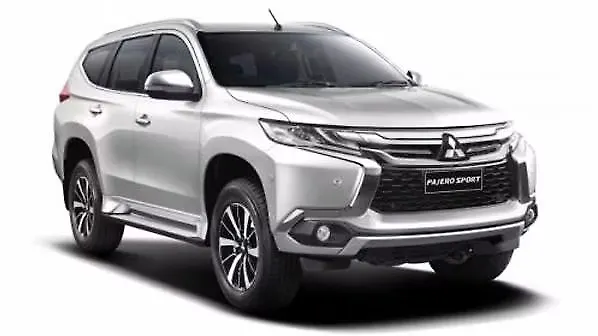
The 2016 Pajero Sport gets the Japanese automaker’s new ‘Dynamic Shield’ grille. Quite an interesting element is the chrome outline for the entire fascia. It extends from the edges of the bumper to the base of the headlamps and has created a floating effect for all the elements contained within.
The style quotient is introduced by the lowered roofline which makes the car look sleeker yet equally muscular thanks to the heavily flared wheel arches and strong shoulder line. A visible feature is the tapering roofline which gives it a crossover-like stance. It has got a significant amount of rear overhang to add to its profile and when viewed from the rear-three-quarters, we can notice the forward leaning stance.
The 2016 Pajero Sport gets pick axe-shaped Christmas tree lamps that stretch over to the side and merge with the shoulder line. Fitting in with the design is the smaller rear glass and a chrome strip above the number plate holder.
Interior
The 2016 Pajero Sport’s cabin gets all the usual goodies including climate control, touchscreen infotainment system and leather trim package. The overall layout is similar to the outgoing model but now gets a black and silver colour combination. On the practicality front, there are pockets sills and two cup holders between the front seats. Further, there is space under the armrest and in all probability has the media connectors for the infotainment system.
For markets like India, the interior trim is expected to be altered to a black and beige combination, something that sells well with the Indian consumers. One of the big USPs of this vehicle is space which like its predecessors, this new car has in oodles, thanks to the cavernous boot despite the third row being up.
Engine and gearbox
This third generation Pajero Sport will be offered with a new 2.4-litre four-cylinder diesel engine producing 181bhp and 420Nm. It has been mated to an eight-speed AT and Mitsubishi’s Super Selected 4WD system in the AWD versions.
Conclusion
It may be displayed at the 2016 Auto Expo and will be launched in India by the middle of next year. We expect that it will be priced in the range of Rs 23 lakh to Rs 28 lakh here. Its competition includes the Ford Endeavour, Toyota Fortuner and the soon-to-be-launched Chevrolet Trail Blazer.
ExteriorThe 2016 Pajero Sport gets the Japanese automaker’s new ‘Dynamic Shield’ grille. Quite an interesting element is the chrome outline for the entire fascia. It extends from the edges of the bumper to the base of the headlamps and has created a floating effect for all the elements contained within.
The style quotient is introduced by the lowered roofline which makes the car look sleeker yet equally muscular thanks to the heavily flared wheel arches and strong shoulder line. A visible feature is the tapering roofline which gives it a crossover-like stance. It has got a significant amount of rear overhang to add to its profile and when viewed from the rear-three-quarters, we can notice the forward leaning stance.
The 2016 Pajero Sport gets pick axe-shaped Christmas tree lamps that stretch over to the side and merge with the shoulder line. Fitting in with the design is the smaller rear glass and a chrome strip above the number plate holder.
Interior
The 2016 Pajero Sport’s cabin gets all the usual goodies including climate control, touchscreen infotainment system and leather trim package. The overall layout is similar to the outgoing model but now gets a black and silver colour combination. On the practicality front, there are pockets sills and two cup holders between the front seats. Further, there is space under the armrest and in all probability has the media connectors for the infotainment system.
For markets like India, the interior trim is expected to be altered to a black and beige combination, something that sells well with the Indian consumers. One of the big USPs of this vehicle is space which like its predecessors, this new car has in oodles, thanks to the cavernous boot despite the third row being up.
Engine and gearbox
This third generation Pajero Sport will be offered with a new 2.4-litre four-cylinder diesel engine producing 181bhp and 420Nm. It has been mated to an eight-speed AT and Mitsubishi’s Super Selected 4WD system in the AWD versions.
Conclusion
It may be displayed at the 2016 Auto Expo and will be launched in India by the middle of next year. We expect that it will be priced in the range of Rs 23 lakh to Rs 28 lakh here. Its competition includes the Ford Endeavour, Toyota Fortuner and the soon-to-be-launched Chevrolet Trail Blazer.
 The new Vento will get LED daytime running lamps and projector headlamps at least for the highline trim. The updates like the chrome garnish in the back and the wider chrome grille in the front will be retained along with the reworked tail lamps. The alloys might be different but the body shell is the same. With the improved looks, the Vento will hold sway with its classic sedan looks.
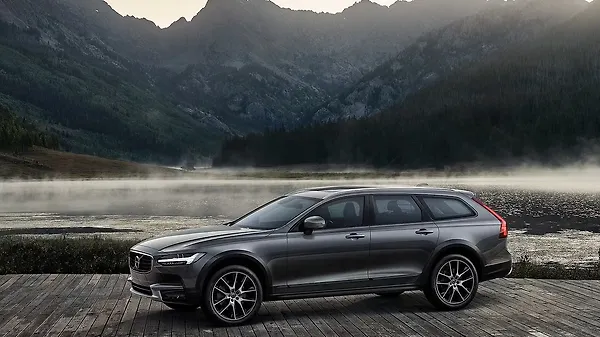 The new V90 wears the Volvo’s new design language which includes the trademark “Thor’s Hammer” LED headlight design, the new grille and Volvo Iron Mark and the characteristic rear tail as seen on all the cars in the Volvo family. On the inside, Volvo has carried forward the cabin from the XC90 model and added few more details on the dashboard and instrument panel, including new air blades that stand vertically on each side of the touchscreen infotainment system.
 The V90 Cross Country gets larger alloys, peripheral cladding and sits visibly taller than the V90 estate. The added brawn is not just cosmetic. Internationally, the V90 comes with petrol, diesel and plug-in hybrid powertrain. The 2.0-litre four-cylinder engine comes in D3, D4, and D5 state of tune in the turbo-diesel variant. The petrol unit on the other hand gets a T5, T6 and T8 tunes. The top-end T8 Hybrid comes with a combined output of 320bhp and 400Nm via an eight-speed automatic transmission. The Cross Country gets all-wheel drive standard with a torque on demand system to cater to all driving conditions.
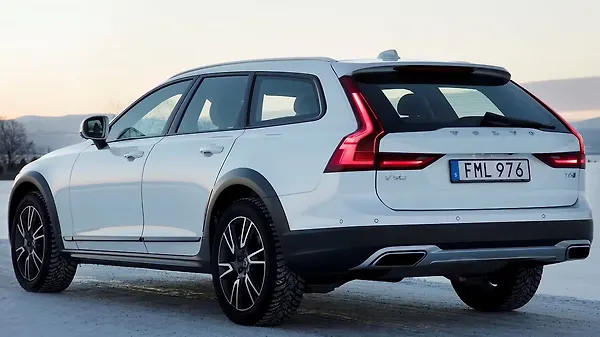 When the V90 arrives on the Indian shores, expect Volvo to plonk in the same powertrain found in the S90 sibling. Also you can expect the car to be fully loaded with all the connectivity options and safety features Volvo has to offer. The V90 Cross Country, like all other Volvo cars will come to India via the CBU route but unlike other car makers, we can expect very good pricing for the V90 Cross Country and if it undercuts the XC90, it certainly will be a steal for what it offers.

 Exterior
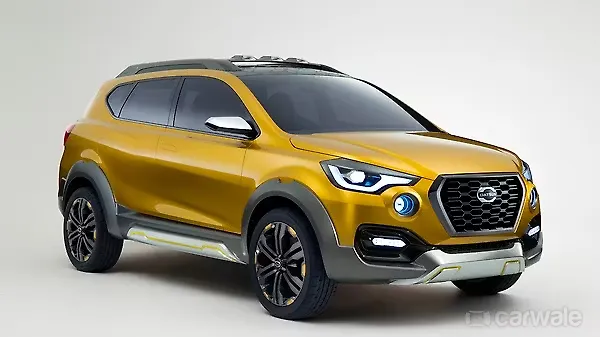
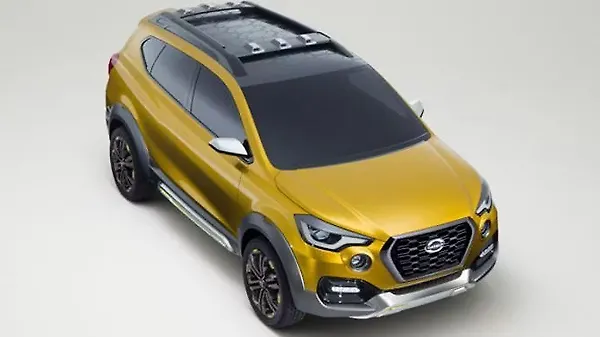
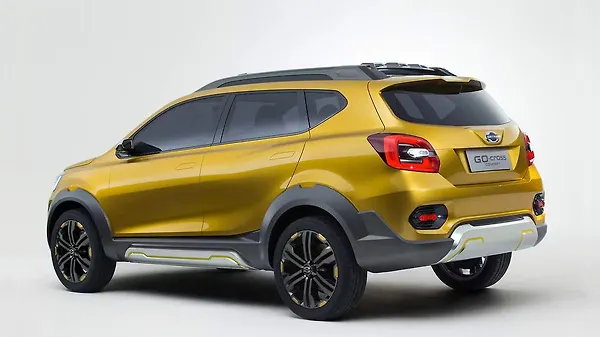 Datsun has fitted this concept car with projector headlamps and LED DRLs which will become standard headlights when the vehicle goes into production. One of the other noticeable elements on the car is the black roof tray with rails which, we believe, will be carried over to the production model. There is a small rear spoiler and fancy looking C-shaped tail lamps which will likely be carried over into production.
 Interior
 The 2017 Hyundai Eon does not get any mechanical upgrades and will continue to be powered by existing 0.8-litre and 1.0-litre engine options that come mated to a five-speed manual transmission. However, the new model might receive a few tweaks to deliver slightly better fuel efficiency figures than its predecessors.